Austin, long the liberal redoubt in conservative
Texas, is quickly becoming the model
A revised version of this article originally appeared in City Journal (here). Thanks to Real Clear Policy (here)!

During the 1970s, Austin—the state capital and home to the flagship campus of the University of Texas—was an affordable haven for the state’s assorted hippies, aspiring musicians, and itinerant bohemian souls. Their motto was “Keep Austin Weird”—a conscious departure from the Lone Star State’s conservative stereotype. A half-century later, Austin’s eccentric slogan is still popular, although—due to Texas’s rapid population growth and urbanization–the city’s progressive politics are becoming the norm statewide. “Weirdness” has evolved into “hipness,” which is synonymous with wokeness. Wokeness is becoming contagious.
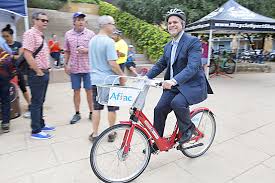
Austin’s mayor, Steve Adler, is an example.
Adler became mayor in 2015 when, as a political novice, he defeated an
incumbent councilman, Mike Martinez, a progressive activist who formerly led
the Austin Firefighters Association. In that race, Adler positioned himself as
the “moderate,” but a centrist orientation—at least by traditional standards–is
no longer evident. Adler presides over a 10-person city council—all
Democrats—elected from single-member districts. He is the only municipal
official elected by the voters city-wide, and was the first mayor to govern
under a momentous 2012 city charter amendment that eliminated at-large voting
for council members. Adler, handily re-elected last year in a well-funded
campaign, has proven to be politically nimble.
The 2012 amendment, which also
expanded the size of the council from seven to 11 (including the mayor), was
intended to make city government less monolithic—and more representative of
Austin’s diverse voters. For decades, the council had been dominated by
“establishment” Democrats from Austin’s influential “west side.” The amendment was even supported by the local
Republican Party organization, in the hopes that the city’s minority of GOP
voters might finally have a seat (or two) at the table. Those hopes were
quickly dashed. Instead, single-member districts merely strengthened the city’s
various minority factions and leftist special interests, making the council more progressive. The GOP’s hoped-for toehold
on the council was both precarious and short-lived.
Instead of “establishment” Democrats, the majority-female council now includes a socialist firebrand, an LGBT activist, a Latina, and—despite a black population of only eight percent–an African-American. The entire council leans to the left. How far to the left? By unanimous votes, the council declared itself a “Freedom City” and recently embraced the so-called Green New Deal. Adler, an Easterner who hails from the Washington, D.C. area and attended Princeton, is a lawyer who became wealthy practicing eminent domain in Austin, representing land owners. As the political direction of the city council veered leftward, so have Adler’s public positions.
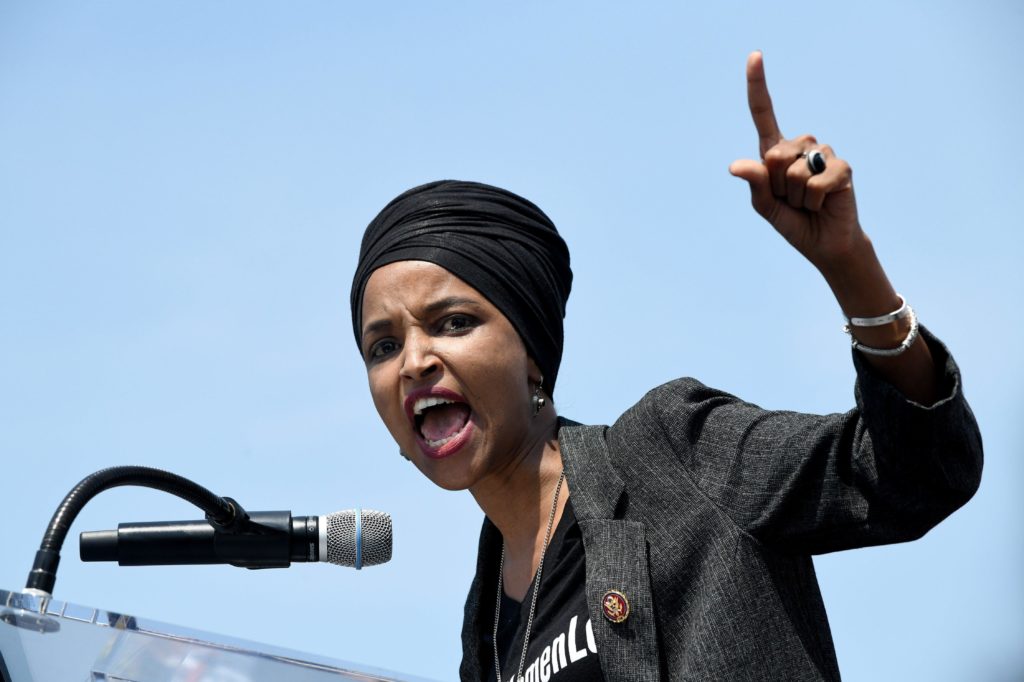
Adler’s latest stunt was
appearing at an Iftar event in Austin featuring the controversial Minnesota
Congresswoman Ilhan Omar as the keynote speaker. The annual dinner, celebrating
the end of the Ramadan fast, was hosted by Emgage, a nonprofit group focusing
on recruiting Muslims to run for office. Despite calls by conservative Texas
Agricultural Commissioner Sid Miller for Adler to skip the event due
to Omar’s record of anti-Semitic statements and remarks dismissive of the 9/11
attacks, Adler—only the second Jew to be elected mayor in Austin—insisted on
attending.
“It’s not inclusive to have a keynote speaker at a
dinner who has repeatedly attacked the Jewish faith and its adherents,” Miller said. “Mayor Adler should help Austin stay
true to its roots and use this opportunity as a teaching moment for Muslims,
Jews, Christians and those of other faiths to come and break bread together in
the spirit of unity and love, not hate,” Miller added. Emgage denounced Miller’s criticism of Omar as
“immoral and racist.” Adler responded that “Every year, this event is a
special opportunity for people of many faiths to grow together. As mayor, it is
my privilege and responsibility to lean into such learning moments with my
community – not to back away from them.”
Adler’s official profile
on the city’s website proclaims that “It is my goal to move our city forward in
a way that is inclusive, innovative and intentionally improvisational,” but he nevertheless
appeared at the event with the divisive Omar, ignoring the opposition and
protests of numerous critics, including the Zionist Organization of America, various Jewish leaders, Jihad Watch, and ACT for America. In his remarks at the
dinner, Adler praised Omar as an “inspiring and wonderful
symbol of our country’s progress toward real and meaningful representation in
government for people who have not previously seen themselves reflected in our
democratic institutions”—an unusual tribute to someone repeatedly, and credibly,
accused of vile anti-Semitic bigotry.
Alas, defending the interests
of Jews and their homeland, Israel, is not considered fashionable in progressive
circles, unlike, say, pushing costly mass transit and “affordable housing”
projects, catering to the homeless, promoting renewable energy boondoggles, encouraging public order offenses, and protecting illegal immigrants. Accordingly, Adler
faced no political repercussions for cravenly sharing the dais with Omar. Indeed,
a liberal press corps rallied to Adler’s
defense. Miller’s rebuke only emboldened Adler, because Austin voters reflexively
and overwhelmingly reject Republican
candidates. In the November 2018 election, Texas Governor Greg Abbott—more popular
statewide than Miller—lost Travis County by more than a 2-to-1 margin. Adler’s
GOP rival in 2018 drew only 6.33 percent of the vote—far less than the
percentage of registered Republican voters.
When Republicans are
considered unelectable in local races, even GOP voters will choose the most
palatable Democratic candidate. Austin aspires to be, in the words of the Wall Street
Journal, “the San Francisco of the South,” spending profligately
on “dubious social programs and utopian schemes.” The sweet spot for a
city-wide official is to be “woke” enough to appeal to progressive voters without
being so radical as to scare the business community. Adler, whose law practice involved
cozy dealings with real estate developers—which have led to recurring charges
of cronyism as mayor– knows that he can (and must) hew to the leftward
orientation of the city council to remain viable politically. Being a
“centrist” in a city like Austin, where local candidates endorsed by the
Democratic Socialists of America are regularly elected, gives Adler significant
leeway to tack left. And he has.
This
realignment may, unfortunately, describe the political fortunes of the Lone
Star State, as the suburbs—as well as the cities—increasingly
trend blue. Adler, now in his second term as mayor, cannot run for re-election.
Another ambitious mayor, South Bend’s Pete Buttigieg (whom Adler endorsed for President), has his
sights set on higher office. Adler might well follow suit. If the fast-growing
and highly-rated Austin is a harbinger for the rest of the state, Texas has
weirdness in its future.