Not all experiments will be successful, especially if the premises are unsound
An abridged version of this essay originally appeared in City Journal on July 17, 2019 (here). Thanks to Real Clear Policy!
In a previous post I profiled a new law school in Knoxville, Tennessee: Lincoln Memorial University’s Duncan School of Law, which offers skills-based training at a lower cost than the prevailing model of legal education. LMU’s goal is to produce practice-ready graduates capable of serving the legal needs of southern Appalachia—a largely rural or semi-rural population. So far, LMU has demonstrated that good job placement and bar passage rates are not inconsistent with low costs and reasonable tuition. Another “alternative” law school, ostensibly with a similar mission, is the University of North Texas at Dallas College of Law, which presents interesting contrasts to both LMU and conventional legal academia.
Unlike LMU, UNT at Dallas is
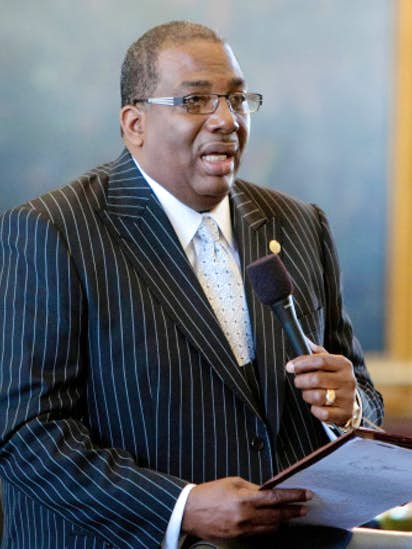
a publicly-funded institution, created by the Texas legislature at the tireless
urging of state Senator Royce West to serve the diverse urban population of
southern Dallas County, which he represents. The law school was authorized in
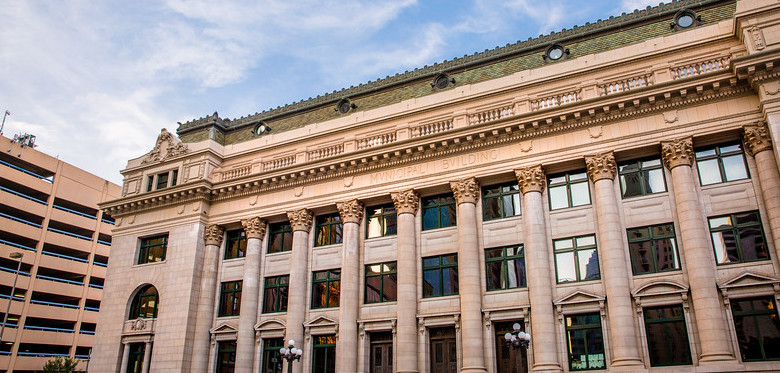
2009 and began operations in fall 2014. Now occupying the historic Old City
Hall building (built in 1914), which was renovated at a cost of over $70
million, the UNT Dallas College of Law is the only public law school in Dallas–one
of the 10 most populous cities in America. The fast-growing Dallas-Fort Worth
“Metroplex” is second only to Houston as Texas’s biggest urban center.
Dallas already had a private law school (Southern Methodist University), and sister-city Fort Worth boasts the newly-acquired and now-public Texas A&M School of Law (formerly Texas Wesleyan), which is rising sharply in the rankings. With UNT, the Lone Star State now has 10 law schools, six of which are state-funded. The state’s other law schools, in addition to SMU and A&M, are: the University of Texas in Austin; Texas Tech in Lubbock; the University of Houston; the historically-black Texas Southern University in Houston (all taxpayer-funded); Baylor in Waco; St. Mary’s in San Antonio; and South Texas College of Law in Houston.
At a time when a serious
lawyer glut was causing law school applications (and enrollments) to decline nationwide,
and law graduates faced a challenging job market in Texas and elsewhere, what
was the state’s rationale for opening a new law school, at great taxpayer
expense? With 29 million residents, Texas is the nation’s second-largest state,
and growing rapidly. Dallas, in contrast to Houston, was arguably underserved
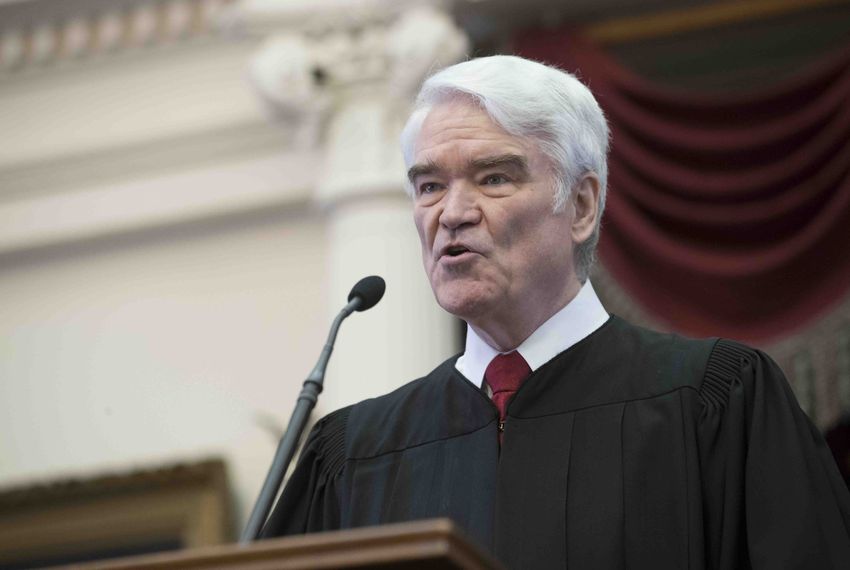
by state-funded legal education. Texas Supreme Court Chief Justice Nathan
Hecht, among others, has long bemoaned the lack of legal resources available to
poor and middle-class Texans. One solution could be a non-traditional template
for training lawyers willing to serve their communities. And, to be candid, Royce West,
who has represented the city of Dallas in the Texas Senate since 1992, is a
powerful legislator who wanted a public institution in
his district serving his constituents.
Politics—and pork—played a
key role, as did as a symbolic nod to “diversity.”
Dallas has become a majority-minority city, and many residents, especially in South Dallas, are economically disadvantaged. West successfully lobbied for an independent Dallas campus for UNT (formerly known as North Texas State University), a well-respected four-year university based in Denton with more than 38,000 students, and an annual budget exceeding $1 billion. UNT at Dallas (or UNTD) was conceived as a commuter school to provide Dallas residents—excluded from the nearby UT-Arlington and UT-Dallas, or even UNT proper, by either cost or lack of academic credentials (or both)–with affordable access to higher education. UNTD, founded in 2010, has an undergraduate enrollment of about 2,700 at its South Dallas campus, many of whom attend part-time.
Almost 80 percent of UNTD
students are minorities, and the acceptance rate for applicants is 74 percent. UNTD’s tuition is lower than at
other nearby public institutions, and—like a community college–its primary
distinction is affordability and accessibility, rather
than rigorous academic standards. UNTD’s law school was avowedly an extension
of this model; in its words, “The University of North
Texas at Dallas College of Law shares a strong commitment with UNT Dallas to
diversify educational opportunities.”
The initial conception was
that by targeting a non-traditional group of law students—including older,
working adults wishing to study part-time, some with military experience,
etc.—and charging them lower tuition, graduates unburdened by massive student
loan debt would be more inclined to provide legal help to ordinary people
unable to afford representation by high-priced law firms. (The average age of UNTD’s law students is 33.) UNTD’s
novel approach initially generated favorable publicity from supportive
journalists, who wrote articles with titles such as “The Little
Law School That Could,” subtitled “What happens when you lower tuition and
admissions standards, then let cowboys and single mothers hit the books? UNT
Dallas College of Law aims to find out.” The National Jurist called the school “a grand experiment.”
One magazine explained UNTD’s mission in these terms:
UNT Dallas wants to train attorneys who might go back to their own communities and provide legal services that many people can no longer afford. It is no longer financially feasible to hang up a shingle and help people with their divorces, probate, and small-business filings. The cost of law school has contributed to what Texas Supreme Court Chief Justice Hecht, and many others in the legal community, warn is a dangerous, widening justice gap. “See, we’re at a strange place,” Hecht says. “We have lots of lawyers looking for jobs, and we have lots of people who need lawyers. But they can’t get together because of the cost.”
The favorable press was
enhanced by the school’s lavishly-funded facilities, downtown location, and
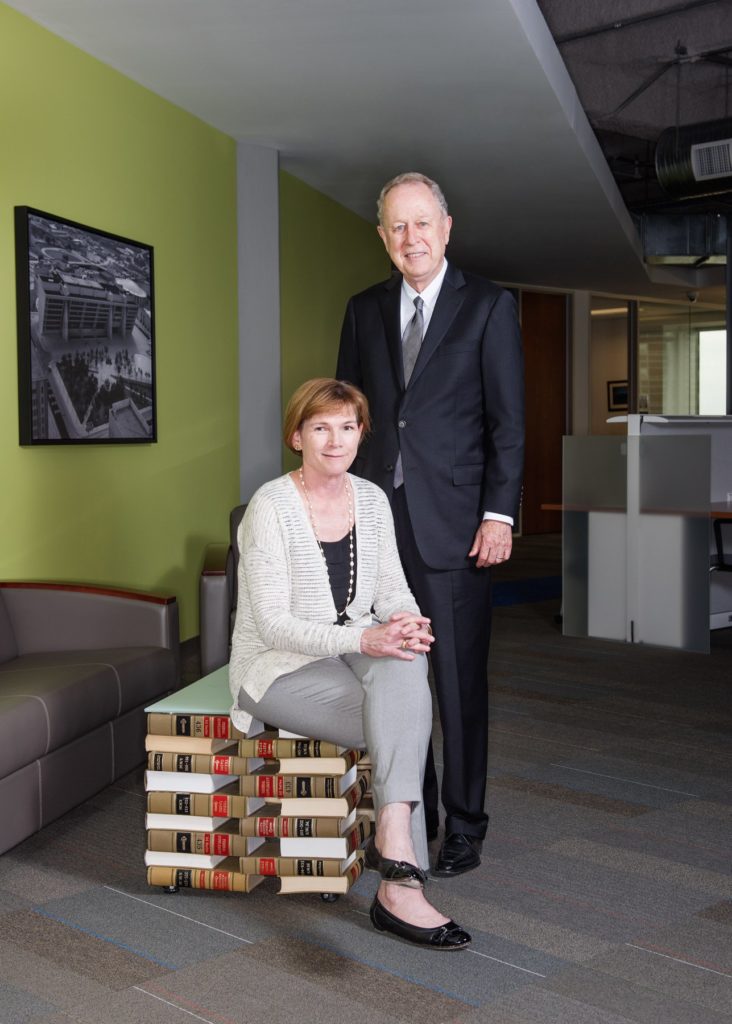
impressive inaugural leadership: retired federal
district judge Royal Furgeson as founding dean and SMU veteran professor Ellen
Prior, a highly-respected legal scholar, as associate dean. Good intentions
surely guided UNTD’s belief that admissions decisions could be made based mainly
on applicants’ “grit” and “life experience,” rather than college grades and
LSAT scores. This approach produced an entering class of around 150 students,
ranging in age from 20 to 74, and very diverse—albeit thin on academic
credentials. In fact, UNTD has received an “A+” rating by The National
Jurist as one of the “Most Diverse Law Schools,” trailing only Texas
Southern among Texas schools.
While certain features of UNTD’s operations
parallel LMU’s model, such as “shaving administrative costs by hiring
professors to teach, rather than conduct
expensive, time-consuming academic research,” UNTD’s Achille’s Heel turned out
to be the unconventional student body. Concerns
about the questionable qualifications of UNTD’s students (as evidenced by low
LSAT scores), led the American Bar Association initially to recommend against provisional accreditation.
The only way to increase LSAT scores would be to admit fewer students, reducing
tuition revenues and undercutting the primary rationale for the school’s very
existence—producing a cadre of practice-ready lawyers to address the unmet
legal needs of the community.

The ABA ultimately reversed itself, and granted provisional accreditation, but its instincts turned out to be correct. When the initial graduating class of UNTD’s College of Law took the Texas bar exam in July 2017, only 59.3 percent passed, the worst results of any of the state’s 10 law schools, and far worse than the statewide average of 72 percent. Baylor led with a pass rate of 93 percent. As the ABA Journal archly remarked, “Although UNT is to be commended for keeping the cost of law school as low as possible, if over 40 percent of its graduates fail the bar, it’s no bargain.” Tuition and fees, at over $18,000/year, though less than what other Texas schools charge, are not exactly a “bargain.”
While UNTD graduates’ bar
results have varied since the July 2017 exam—ranging from a pass rate of 40
percent to 61 percent—the school is consistently one of the state’s worst
performers, vying for last place with the mediocre Texas Southern. What does
the future hold for UNTD? Furgeson, the school’s founding dean, stepped down in
June 2018, and was replaced by Angela
Felecia Epps, former dean of Florida A&M University College of
Law, a historically-black institution whose graduates, FAMU proclaims,
“are champions of civil rights and social justice.”Moreover, Prior
has been succeeded as associate dean by the itinerant Peter
Alexander,
whose undistinguished resume includes prior service as the founding dean of the
defunct Indiana Tech Law School, which closed in 2017.
At this point, it is unclear
what path UNTD’s College of Law will take. Will it become an activist social
justice academy in the mold of another self-styled urban law school, the CUNY
School of Law (rated as the “most diverse” law school in America)? Or
will Dean Epps lead UNTD in the direction of Texas Southern University’s Thurgood Marshall
School of Law as a de facto historically-black institution? Texas
Southern is not a particularly auspicious model, since its graduates had the second-worst
bar passage rate in July 2017, barely ahead of UNTD at 63.64 percent, and in subsequent years has anchored the cellar
position with pass rates as low as 28 percent. In either event, it is likely that UNTD’s
primary function will continue to be, as one sympathetic observer remarked, “to produce more law graduates of
color and from modest origins than are turned out by the established law schools.”
Social engineering, in other words.
Some significant changes will have to be made to salvage the enormous investment of taxpayer money made to create—and operate—the UNTD College of Law. The state of Texas contributes over $27 million a year to the law school. Indeed, skeptics would be entitled to wonder if the concept was fatally flawed from the inception. The premise was that “nontraditional” students could be molded into affordable legal services providers, yet barely half of UNTD’s 2018 graduates managed to find any type of full-time legal employment. In hindsight, it appears that the Texas legislature got snookered into approving this white elephant, and the state’s hapless taxpayers are left holding the bag.

The lessons for reforming
legal education seem to be that good intentions alone do not suffice to produce
salutary results. Many aspects of the traditional academic model can be
tweaked, such as reducing costs, emphasizing practical skills over theory, teaching
the basics, and so forth. Lowering admissions standards to the point of
enrolling students ill-equipped to pass the bar exam, however, is short-sighted
and futile. Subsidizing such disastrous experiments at taxpayer expense to
appease powerful politicians such as state Senator Royce West is an egregious breach of the
public trust.