Saving Can-Do: A Post-Trump Era Common Sense?
Alas, as with Thomas Paine, a rousing call to action is not the same as a blueprint for victory.
This essay first appeared in Law & Liberty on October 3, 2025 (here).
Political wisdom can be dispensed in small packages, as was the case with Thomas Paine’s succinct pamphlet, Common Sense, published in 1776. Many turgid “doorstop” books, in contrast, contain little in the way of lasting insights. Philip K. Howard, a well-respected New York lawyer who has authored many acclaimed “small” books, has now written another, Saving Can-Do, subtitled “How to Revive the Spirit of America.” Howard’s métier is debunking widely-held conventions in lively prose featuring illustrative real-life vignettes. He is the rare lawyer who decries the excesses of our legal system and administrative state, with their byzantine rules and bloated bureaucracies.

Like his previous books, Saving Can-Do is a joy to read—and loaded (in a mere 97 pages of text) with nuggets of wisdom and common sense. Howard uses the MAGA movement and opinion polls showing a bipartisan consensus for major reform of the federal government as a springboard for planning “what comes next.” Howard sees the 2024 election as a “major shift” in our social order, triggered by the perceived failing of the “ruling elite,” and—somewhat portentously–compares our current moment to the circumstances that led to Russia’s Bolshevik Revolution in 1917. He wonders: What will fill the void if President Trump succeeds in taming the federal leviathan?
Howard, who served on Trump’s transition team in 2017, speculates: “Letting nature take its course after Trump’s wrecking ball is unlikely to end well, leaving a wreckage of public agencies, perhaps replaced by an AI-driven autocracy that would exacerbate populist alienation.” That’s certainly not an appealing image, but neither is it particularly realistic. Howard proposes a post-Trump vision for “better government” that consists of delivering results by letting people use their judgment without unnecessary government interference. His solution reiterates themes from his previous books: “Replace red tape with responsibility. Give leaders room to lead. Let us tackle local problems in our own ways. Let us interact honestly without the overhang of legal threats.”
More federalism and less government regulation, in other words. Most libertarians, classical liberals, and small government conservatives agree with this vision—and have been advocating it for decades. The tough question is, how do we return to the halcyon era that existed prior to the Great Society, New Frontier, Fair Deal, the New Deal, and possibly even the Progressive Era? Short of inventing a time machine, how do we get the Big Government genie back in the bottle? We know the extent of the problem—too many laws, too many lawyers, too many bureaucrats, too much rent-seeking, too much centralized control, too much federal government, etc.—but how do we fix it? How do we “revive the spirit of America”?
DOGE has already petered out, and it is too soon to tell how far the Supreme Court will allow Trump to go in dismantling the administrative state. Many Trump supporters, myself included, wish it were true that “Trump is smashing the drowsy bureaucracies with nothing to replace them,” as Howard claims, but the vast swamp in D.C. is proving to be very resilient. Despite Howard’s assessment that “Democrats are strangely quiet,” the Resistance is readily apparent, especially in the lower federal courts, and the rhetoric emanating from the left grows progressively shrill (no pun intended). In short, while Trump is making some headway, the notion of “draining the swamp” is still a MAGA pipe dream, especially if Republicans lose control of Congress in the mid-terms.
Accordingly, the prospect of a “power vacuum” in the nation’s capital, and even the characterization of Trump 2.0 as a “wrecking ball” may be overblown. Nevertheless, calls for reform are always timely, even if solutions are often elusive. Howard acknowledges that “replacing the red tape state will be a decade-long project,” but many of his proposals—such as replacing civil service with a merit system, eliminating public employee unions, repealing employment discrimination laws, and dramatically reforming our civil justice system—will require that America’s most powerful special interests be brought to heel. This is extremely unlikely to happen. Many center-right think tanks have broken their picks unsuccessfully pushing such policies—since President Reagan’s election in 1980.
Howard’s game plan for accomplishing his ambitious reforms is laid out in three essays, two of which were previously published by the Hoover Institution and the Manhattan Institute, respectively. (The slim text is augmented by nearly 40 pages of end notes.)
The first essay, “How to Recover America’s Magic,” draws upon Americans’ heritage as “strivers”: “America’s culture of striving was born of exiles and explorers confronting the challenges of the wilderness. Americans were not locked in to predetermined paths of the old world.” Howard deftly explores this theme, and describes how far afield we have gone as a nation, conceding that “the spirit of America has been collapsing over the past fifty years.” Nostalgia aside, I wonder how much of the settlers’ and founders’ character is reflected in urban voters who elected far-left candidates such as Brandon Johnson (and seem poised to elect radical socialists such as Zohran Mamdani) to helm our major cities, or the urban cohort that celebrates Luigi Mangione for murdering a health care executive in cold blood by shooting him in the back, ambush-style.
I appreciate Howard’s ringing peroration in honor of our past, but a great deal of cultural, moral, and spiritual rot must be fixed before “America’s magic” will be anything more than a distant memory. I concur that “the only cure is to restore to Americans their personal, institutional, and moral agency,” assuming that a majority of Americans wants those things. Political choices being made in blue states and cities suggest otherwise. “Let Americans roll up their sleeves and act like Americans again” is a bracing dose of Boomer tough love, but ignores the fact that half the country has a different notion of citizenship, and a starkly different vision of America’s future. Not all voters share Howard’s discontent.
Howard’s second essay, “The Human Authority Needed for Good Schools,” addresses the crisis of K-12 public education, which is undeniably failing to educate our youth. Howard properly blames teachers’ unions and excessive regulation, which in many cases strips teachers of their ability to maintain disciple and order in the classroom. “Mediocre schools are the norm in America,” he correctly posits, for a variety of reasons. Teachers’ unions are a major factor, but flawed pedagogy promoted in our universities’ colleges of education goes unmentioned by Howard. I believe that the best way to fix the broken K-12 system is through school choice: charter schools, vouchers, and other options empowering parents to escape the public education monopoly. Howard touts innovative programs such as Eva Moskowitz’s Success Academy and the Knowledge Is Power Program model, but in my opinion large-scale reform require competition enabled by widespread school choice.
Howard’s third essay, “Escape from Quicksand,” addresses the sclerotic obstacles to infrastructure improvements. Inefficiency, fraud, waste, and abuse (as well as outright corruption) make it impossible for state and local governments to execute large-scale construction projects that prior generations treated as routine.
FDR’s public works programs (WPA, CCC, and the Civil Works Administration overseen by Harry Hopkins) promptly put people to work and got things done. The massive Hoover Dam was built ahead of schedule and under budget. As Howard reports, under President Biden, it took three years (and a budget of $7.5 billion) to build eleven electric vehicle charging stations.What happened to our can-do? Environment regulations, labyrinthian permitting processes, excessive bureaucracies, cumbersome procurement rules, lawsuits, workforce quotas, union-mandated feather-bedding, climate change initiatives, and a host of other maladies have seemingly made it impossible for the federal government to competently perform any large construction projects. Howard rightly questions whether, under the current system, we could successfully undertake projects such as the Erie Canal, Panama Canal, transcontinental railroad, or the Interstate Highway System.
Devising solutions is more difficult than identifying problems. His proposed solution to “infrastructure paralysis” is to implement “a legal framework that empowers designated officials to make multiple trade-off judgments. Choices need to be made. This requires replacing balkanized approvals by multiple agencies and multiple levels of government with one decision-making hierarchy.” This assumes a competent manager acting in good faith. If, for example, former Transportation Secretary Pete Buttigeig had been FDR’s public works czar instead of Harry Hopkins, would the New Deal programs have been similarly successful? As Howard notes, “Judgments can be made poorly, of course. That’s why oversight and accountability are critical.”
The crux is oversight by and accountability to whom? As always, personnel is policy. And politics—in the form of elections–determines personnel. Ever the nonpartisan, Howard does not confront the fact that much of the dysfunction he woefully describes is the result of deliberate “progressive” policy decisions embraced by the Democratic Party. Our modern predicament is not an accident.
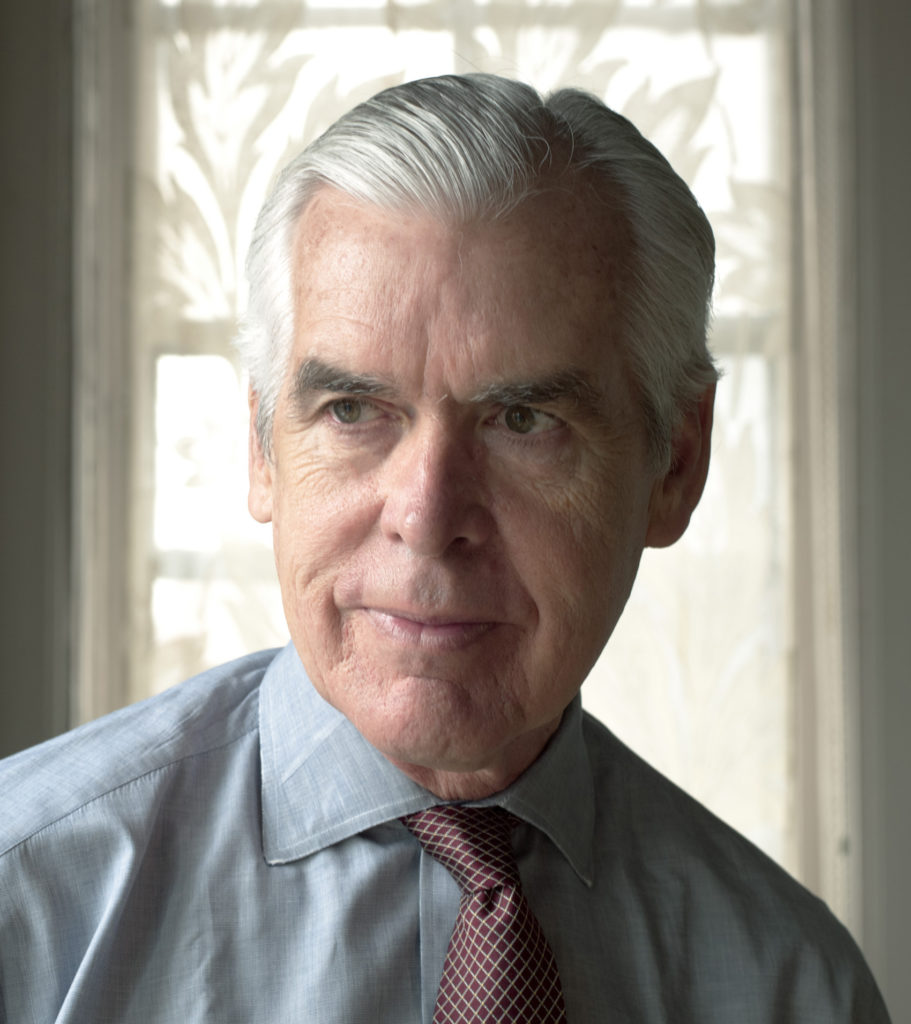
Howard’s solution to reforming the bureaucracy is “creating new institutions that can inspire trust.” This would be done by creating a “national infrastructure board” to “advise political leaders and the public on the priorities and progress of infrastructure projects.” He also proposes a “nonpartisan recodification commission” to “design and propose the details of these reforms,” subject to their adoption by Congress. These proposals resembles a reform Howard advanced in his 2019 book, Try Common Sense, reviewed here by Charlotte Allen. Allen wryly observed that “the chief problem with Howard’s book” is its reliance on boards of independent experts to “implement this massive mucking out of multiple Augean stables.” Allen aptly added that
Perhaps Howard’s faith in the virtue, mental fortitude, and sheer numbers of the best and the brightest whom he would designate to staff all those commissions and committees is greater than my own, but I can’t help but wonder if they wouldn’t be the usual round of faded politicos, Ivy League superstars, and anointed public intellectuals…. William F. Buckley’s chestnut about preferring to be governed by the first 2,000 names in the Boston telephone directory comes to mind.
Just so.
Howard convincingly demonstrates that we have dug ourselves into a deep hole, over a period of many decades, by relying on feckless leaders pursuing misguided ideas. In many cases, Americans voted for these leaders precisely because they promised to keep digging the hole. What we need isn’t a board or commission—however chosen or staffed—to recommend solutions to the hole, but leaders who see that the hole is an abyss, and who stop digging, fill it in, and pursue more sensible policies. Arguably the voters sensed this in 2016, when—in Howard’s words—“Broad populist resentment…led to the takeover by Trump’s MAGA movement of the Republican Party, and now Washington.”
Before Howard writes off the Trump presidency and plots “what comes next,” perhaps he should focus on concrete policies and reforms that Trump 2.0 could implement, via executive order or otherwise. We have in the White House an agent of change and disruptor like no other in my lifetime. Saving Can-Do would have been more useful as a blueprint for shaping the MAGA agenda in Trump’s second term. Instead, Howard’s evident disillusionment with President Trump reduces Saving Can-Do to yet another iteration of Howard’s wishful thinking. We need realistic solutions to the nation’s myriad problems.