Justice Alito Cleans the Augean Stable of Faux Voting Rights Precedents
The Court’s conservative majority holds that “affirmative action” is not required—or permitted—in congressional apportionment; the drawing of voting districts does not violate federal law absent intentional discrimination.
A version of this essay originally appeared in The American Mind on May 5, 2026 (here). Thanks to the Tennessee Star (here), Power Line, Instapundit (here), and Ace of Spades HQ (here)!
Introduction
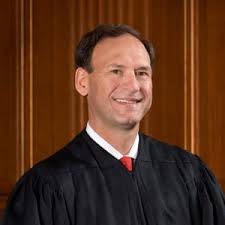
Last week, writing for a 6-to-3 majority, Justice Samuel Alito unraveled decades of confusing and misguided caselaw construing the 1965 Voting Rights Act (VRA) to hold that states may not engage in racial gerrymandering—or be forced to do so by federal courts—in the course of drawing congressional districts. The Constitution’s Equal Protection Clause forbids race-based discrimination, Alito pointedly declared, preventing section 2 of the VRA from being interpreted to require the creation of “majority-black” districts simply to comply with the VRA: “§2 does not impose liability at odds with the Constitution.”
The landmark decision in Louisiana v. Callais may dramatically alter congressional districts in southern states, producing Republican gains in the mid-terms as improperly-drawn maps such as the Bayou State’s SB8 are revised to comply with Justice Alito’s “update”—and narrowing–of the leading VRA precedent, Thornburg v. Gingles (1986), authored forty years ago by the notorious liberal activist Justice William Brennan. In a familiar scenario, Louisiana had created a second majority-black congressional district at the direction of a federal court, which interpreted the VRA to require more representation for black voters. (In 2020, blacks comprised 31 percent of the state’s population.)
Contrary to the claims of partisan critics, the decision in Louisiana v. Callais does not “gut” or “hollow out” the VRA. Nor, contrary to Justice Elena Kagan’s hysterical dissent, does the majority in Callais “eviscerate” the VRA or render section 2 “all but a dead letter.” Justice Alito’s meticulous opinion for the majority merely prevents the VRA from being abused to dictate “proportional representation” (i.e., racial quotas), contrary to the express language of section 2, which states that “nothing in this section establishes a right to have members of a protected class elected in numbers equal to their proportion in the population.”
Alito’s mastery of the Court’s labyrinthine precedents under the VRA allowed him to round up colleagues not inclined to overrule Gingles altogether, such as Chief Justice Roberts and Justice Brett Kavanaugh, who upheld Gingles just three years ago in Allen v. Milligan (2023). Alito’s consensus-building prowess has made him a remarkably effective originalist/textualist reformer on the Court, as Mollie Hemingway explained in her recently-published biography of the justice, aptly titled Alito: The Justice Who Reshaped the Supreme Court and Restored the Constitution.

Louisiana v. Callais is consistent with the Roberts Court’s pattern of restoring the 14th Amendment’s command of color-blindness to the High Court’s execrable body of “living Constitution” jurisprudence, which I described in The American Mind as “an incoherent mélange of liberal pablum, a doctrinal wasteland.” One of the major failings of the non-originalist approach to constitutional law that prevailed under the tutelage of John Roberts’ predecessors, Chief Justices Earl Warren and Warren Burger, was the absurd notion that federal civil rights laws, enacted to remedy intentional race discrimination, should be construed to create equality of end-result rather than equality of opportunity. Quotas require discrimination.
Hence, for decades prior to the Court’s 2023 decision in SFFA v. Harvard, racial preferences in higher education were permitted to achieve “diversity” (i.e., racial and ethnic quotas), despite statutory bans on race discrimination. Similarly, in Griggs v. Duke Power Co. (1971), the Court embraced the quota-conscious theory of “disparate impact” in employment discrimination, even though the relevant statute (Title VII of the Civil Rights Act of 1964) prohibits only “intentional” discrimination and states that preferential treatment is not required to achieve statistical parity in the workforce. [42 U.S.C. section 2000e-2(j)] Callais merely aligns the VRA with the race-neutrality dictated by the Equal Protection Clause.
Slowly but surely, Alito is playing the role of Hercules, cleaning out the Augean stables of doctrinally-unsound Supreme Court precedents.
Background of the VRA
Congress enacted the VRA in 1965 pursuant to section 2 of the Reconstruction Era 15th Amendment, which states that the right to vote “shall not be denied or abridged by the United States or by any State on account of race, color, or previous condition of servitude.” The key provision of the VRA is section 2, which prohibits “voting qualifications,” “prerequisites to voting,” and “standards, practices, or procedures” imposed by any state to deny or abridge the right to vote based on race.
Congress’s goal was to prohibit states from disenfranchising blacks with obstacles to voting such as poll taxes, literacy tests, property qualifications, white primaries, and grandfather clauses, not to create electoral parity. (Justice Clarence Thomas has long taken the position (joined by Justice Scalia), repeated in his concurring opinion in Callais, that “§2 of the Voting Rights Act does not regulate districting at all.”)
VRA Precedents Prior to Callais
Despite the relatively straightforward statutory language, the Supreme Court’s opinions interpreting the VRA had created a bewildering doctrinal morass, strongly suggesting that race-predominant districting was permitted—or even required—if necessary to provide adequate “opportunities” for protected minorities to elect representatives of their choice. Districts are drawn by state legislatures, often for the partisan benefit of the political party that controls the legislature. This practice, called “gerrymandering,” dates back to the early 19th century. Disputes over the drawing of districts to favor the political party in control are considered non-justiciable—i.e., unreviewable by the courts as a “political question.” Democracy polices itself.
As a result of the Court’s muddled caselaw, liberal groups frequently filed lawsuits under section 2 of the VRA—or threatened to do so, cowing legislators—to force states to adopt more majority-minority districts. Compounding the problem, amorphous judicial precedents made it difficult to distinguish between partisan gerrymandering (which is permitted) and maps that violate section 2 of the VRA, particularly since blacks form a reliably Democratic voting bloc. Many lower federal courts had construed the Court’s VRA precedents to require proportional representation for blacks and other minorities, despite the explicit language in section 2. This is what happened in Louisiana, producing marathon litigation that ended in last week’s decision.
Case Overview
Louisiana redrew its six congressional districts after the 2020 census to account for population shifts, initially retaining the single majority-black district in the existing map, which included much of New Orleans. VRA litigation predictably ensued, and in 2022 a federal court ordered the state to create a second majority-black district. White residents objected to the unwieldy map created to comply with the court’s ruling, which contained a new majority-black district stretching some 250 miles from Shreveport to Baton Rouge. The objectors convinced a different federal court in Louisiana that SB8 was a racial gerrymander that violated the Equal Protection Clause.
The Supreme Court agreed to review the case to determine whether racial gerrymandering is unconstitutional.
Analysis
Reviewing and distinguishing the dense thicket of prior VRA precedents, the majority in Callais concluded that a challenged map will not violate section 2 of the VRA absent evidence creating a “strong inference that intentional discrimination occurred.” Reaching this conclusion required a lengthy discussion of, and “update” to, the prior decision that caused much of the mischief and confusion under the VRA—the 1986 Gingles decision written by Justice Brennan (who retired in 1990). The Court in Callais rejected the notion that section 2 of the VRA requires the creation of majority-minority districts to maintain proportional minority representation, under the rubric of preventing “vote dilution” or otherwise. The Court held that “the Voting Rights Act does not guarantee equal outcomes.”
The majority opinion in Callais genteelly narrowed the holding of Gingles without overturning it. Justice Alito noted that “Gingles was decided at a time when this Court often paid insufficient attention to the language of statutory provisions, and Justice Brennan’s opinion for the Court followed this pattern.” Callais holds that mere disparate impact is not the type of harm that violates the VRA or the 15th Amendment. In revisiting Gingles, the Court considered the “important developments” that have occurred in the past 40 years: Jim Crow is long over; the racial gap in voter registration and turnout has largely disappeared; a robust two-party system has emerged in most states; and in recent years the Court has strictly limited the permissible use of racial distinctions. Accordingly, race-based re-districting is forbidden.
Significance
Callais is a game-changer. Under Callais, states are no longer required to create election districts to achieve proportional representation—quotas, in effect. The VRA still protects voting rights, but curbs litigation abuses. In the words of Ed Blum, the champion of color blindness who founded Students for Fair Admission, bogus VRA litigation pressured states “to sort citizens by race and draw majority-minority districts to hit demographic targets.” The Court’s prior VRA caselaw was not faithful to the text of the statute or to the Equal Protection Clause. Callais corrected that, restoring the original purpose of section 2 and moving the nation toward a race-neutral system of election law.
Leftist pundits denounce the ruling because much of the Democrats’ political power rests on racially gerrymandered maps that will be re-drawn due to Callais. In jurisprudential terms, Callais is a triumph of originalist/textualist analysis and equality before the law.