Hawaiian Myths versus Historical Realities
Hawaiian mythology is rich enough without embellishing (or sanitizing) it at the expense of the truth.
Thanks to Real Clear History (here) and Ace of Spades HQ (here and here)!
I love Hawaii. My wife and I recently returned from a delightful vacation on the Big Island. The weather is near-perfect, the scenery is beautiful, and the people are friendly. The history of the Hawaiian archipelago is fascinating, even if a phony, sanitized version is peddled in certain pro-native circles. I wrote about this for Law & Liberty a decade ago following a prior trip to Maui. I understand that “presentism”—the temptation to judge the past using modern-day values and sensibilities—is a disservice to history. My objection is not so much about what happened in the past as it is to revisionists fabricating a false narrative that air-brushes inconvenient facts out of history altogether.
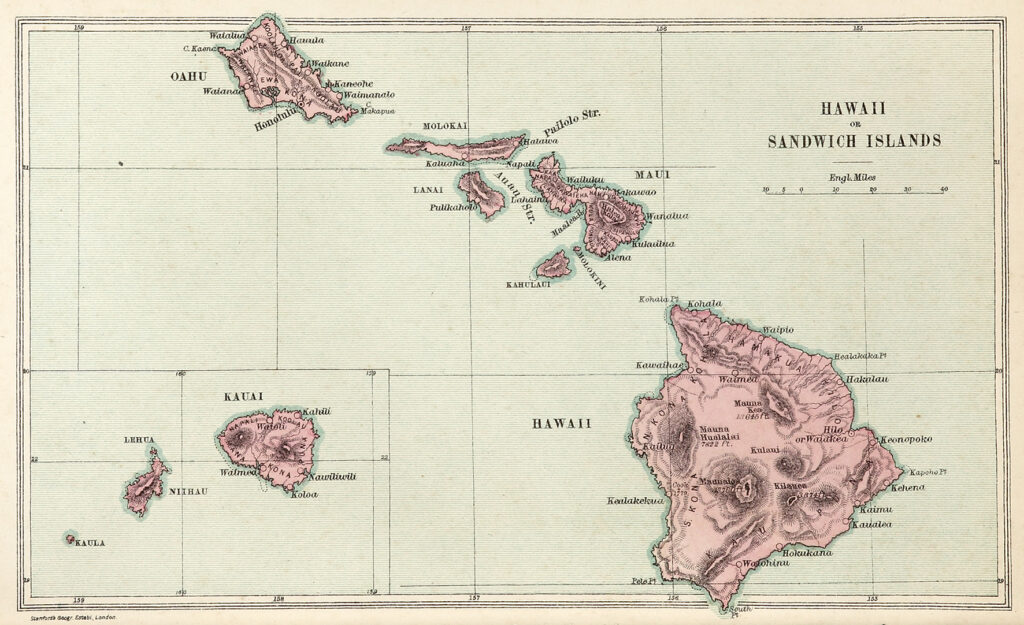
Several things caught my attention as we explored the Big Island. Tour guides, perhaps with the goal of promoting the island’s tropical mystique—reinforced with the familiar leis, luaus, and hula dancing–casually made inaccurate statements about historical events. The most jarring misrepresentation concerned the death in 1779 of Captain James Cook, at the hands of Hawaiian natives in an altercation triggered by the natives’ theft of a longboat from the British naval ship that Cook commanded, the HMS Resolution. Never having seen nails before, the natives coveted the metal hardware used to build the craft. A sea captain in the middle of a multi-year voyage traversing the world’s oceans understandably considered the theft of a vital longboat to be a threat to the safety of his mission, akin to piracy or mutiny.
Two separate tour guides during our visit opined that Captain Cook “deserved” to be killed at Kealakekua Bay on the Big Island. Who was Cook? Why and how was he killed? Did he “deserve it”?
[A brief digression about tour guides: The island of Hawaii is nicknamed the “Big Island” for a reason; at over 4,000 square miles, it is nearly twice as large as the rest of the Hawaiian Islands combined. For comparison purposes, the Big Island is about the size of Connecticut. Guided land excursions spare tourists from navigating sketchy roads and bearing the obscenely high cost of gasoline. Some aquatic destinations (including scenic Kealakekua Bay) can be reached most easily by guided boat charter.]
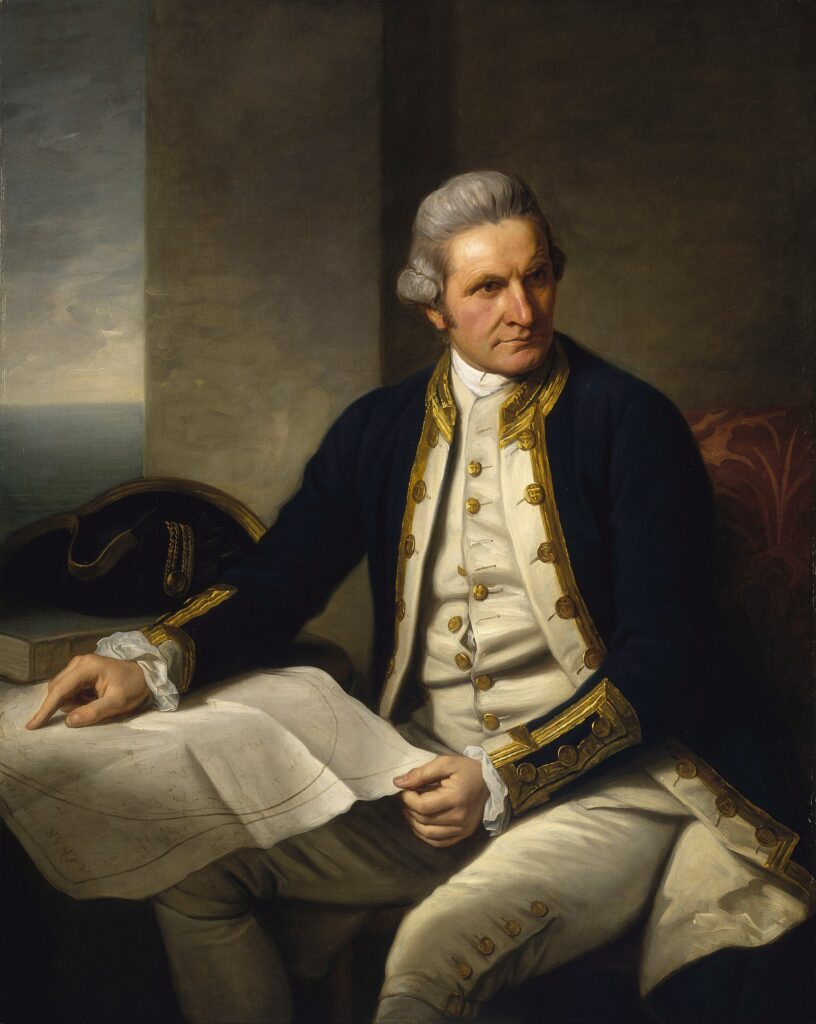
Captain James Cook
Cook was arguably the greatest sailor, navigator, cartographer, and explorer of all time. As a British naval officer, between 1768 and 1779 Cook led three major voyages to the Pacific and Southern Oceans, circumnavigating the globe multiple times and sailing tens of thousands of miles across largely uncharted oceans. He was the first European to discover New Zealand, Australia, and the Hawaiian Islands. Cook completed the first circumnavigation of New Zealand, and mapped many previously-uncharted areas around the globe, including Easter Island, South Georgia Island, and Alaska. Although he never sighted Antarctica in his lengthy journeys, he encountered icebergs, was the first European to cross the Antarctic Circle, and came within 75 miles of the frozen continent—without knowing it.
Cook is the subject of several biographies, the most encyclopedic of which is John Cawte Beaglehole’s The Life of Captain James Cook (1991). In addition to Cook’s many significant scientific observations and navigational advances, Cook enforced strict nutritional rules aboard his ships and virtually eliminated scurvy, which for decades had been the scourge of the Royal Navy, killing more than two million sailors during the Age of Sail. Cook’s contributions to the prevention of scurvy led the Royal Society to award him the Copley Gold Medal.
Cook’s remarkable accomplishments are memorialized throughout the world, with statues, monuments, and geographic features named in his honor. For present purposes, I am focusing on the large white stone obelisk erected by the British in 1874 on the north shore of Kealakekua Bay on the Big Island, the approximate location of Cook’s violent death at age 50 on February 14, 1779. The site of the 27-foot-tall Captain Cook Monument was deeded to the United Kingdom in 1877 by Princess Likelike when Hawaii was still an independent monarchy.
Let’s back up and start from the beginning. How did Cook end up getting killed on the beach of Kealakekua Bay?
Cook inadvertently discovered the uncharted archipelago of Hawaii on January 20, 1778 when he landed on the shores of Kauai during his third voyage (1776-1779), the goal of which was to search for a North-West Passage connecting the north Pacific Ocean to the Atlantic. He was the first European explorer to encounter the archipelago, which he named the “Sandwich Islands” after the fourth Earl of Sandwich, who served as the First Lord of the Admiralty. After a brief and peaceful visit, he continued across the Pacific Ocean toward the North American continent in an unsuccessful search for the North-West Passage for approximately nine months. During that time, he explored the coast of Oregon, what is now British Columbia, Alaska, the Bering Strait, up to the Arctic Circle, and the Siberian coast.
After failing to find any passage, Cook decided to return to the Hawaiian Islands as a base to spend the winter and resupply before a second attempt the next season. His two ships uneventfully visited the coast of Maui in November 1778, and eventually anchored in Kealakekua Bay on the west coast of the Big Island in mid-January 1779. This was Cook’s first appearance on the Big Island. Relations between Cook (and his crew) and the natives were initially friendly. Some scholars speculate that the superstitious natives, living in isolation for a millennium in what was then the most remote place on earth inhabited by humans, believed that Cook, who stood over six feet tall, was the Polynesian god Lono. Cook’s arrival coincided with the Makahiki, a Hawaiian harvest festival of worship for Lono.

In any event, after a month of preparations on the Big Island, Cook set sail to resume his exploration of the northern Pacific, but shortly after departure a strong gale caused Resolution‘s foremast to break, so the ships returned to Kealakekua Bay for repairs. Upon his return, the natives on the Big Island were less friendly to Cook and his crew. Some scholars speculate that the natives felt betrayed that the man whom they believed to be a god could suffer the misfortune of a broken mast. Moreover, one of Cook’s crew had died of a stroke and wished to be buried ashore, further diminishing the sailors’ standing as gods. Makahiki had ended. As relations became strained, the natives began a series of thefts, culminating with stealing Cook’s largest longboat, which he would need in his upcoming Alaska expedition. Cook was incensed. He demanded that the boat be returned, to no avail. More forceful measures would be required, something 18th century British naval captains were familiar with.
Cook and his crew attempted to hold the natives’ king hostage to force return of the longboat. Cook had previously employed this strategy successfully in a similar situation in Tahiti. In the ensuing altercation, the fray turned violent. On February 14, 1779, Cook and four of his crew were clubbed, stabbed, and stoned to death (the natives lacking access to firearms at this time) on the beach at Kealakekua Bay. Seventeen Hawaiians were reportedly shot and killed. The precise cause of the violent conflict—over a stolen rowboat!–remains unknown.
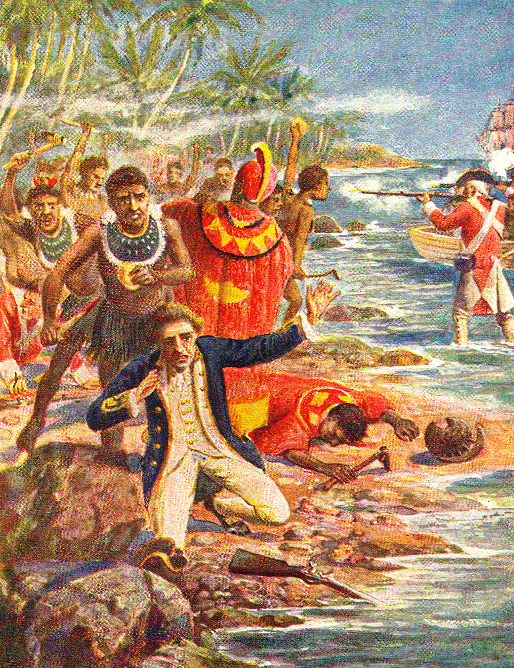
There were enormous cultural and language differences between Royal Navy sailors and Hawaiian natives. Cook was unaware of the rules and protocols considered sacred by the Hawaiians—called kapu—the violation of which was punishable by death. The natives may have felt entitled to the coveted iron in the longboat in exchange for their generous hospitality. Hawaiians apparently did not realize that stealing longboats from an HMS vessel violated a British form of kapu. British seamen were routinely flogged (or worse) for lesser offenses. Theories abound and perspectives differ. By all accounts the conflict was a tragic misunderstanding. It is certainly unfair to cast the blame entirely on Cook and his crew.
The Hawaiians’ attitude toward Captain Cook has changed over time. In the immediate aftermath of the incident, Hawaiian leaders regretted the killing of Cook. As demonstrated by the donation of a site for the Captain Cook Monument, Hawaiian royalty felt affection for Cook. A young Kamehameha, later to become a united Hawaii’s still-revered king, witnessed the violent melee in the beach of Kealakekua Bay and concluded that he wanted to have the Europeans’ superior weapons in order to conquer his enemies. He succeeded in this by eventually cultivating Western advisors, and used the advantage of gunpowder and cannons to defeat his rivals. In 1978, the state of Hawaii honored Cook with a statue on Kauai, near the site of his landing 200 years earlier.
Thus, for two centuries Cook was regarded as a hero in Hawaii and is still admired in his native Great Britain. Recently, however, Cook became associated in the mind of leftist critics with the now-disfavored practice of European colonialism, which Cook’s various voyages had—in hindsight–accelerated. Even though any contact with strange cultures would have exposed indigenous Hawaiians to potentially-fatal diseases for which the natives lacked immunity, Cook became the target of blame. It was his fault. The “discovery” of Hawaii by Europeans wrought centuries of tumultuous change, as missionaries arrived to convert the natives to Christianity and Western mores, Western businessmen turned Hawaii into lucrative plantations for growing sugar cane and pineapples, and the islands’ customs and traditions—including kapu and the Hawaiian monarchy—gave way to modern rule, and ultimately American statehood.
Many Hawaiians (and native-sympathetic haoles, or whites) now regard these developments through the lens of critical theory and view the natives as the victims of Western oppression. Obliging academics have created a mythology of victimhood in which native Hawaiians were robbed of their paradisal lifestyle and reduced to serfs (or worse) in a capitalist economy to which they were unaccustomed and unsuited. In this view, disputed by some historians, Americans deposed their monarch, stole the natives’ land, and forced them into statehood. Cook has become the symbolic scapegoat for this type of revisionist thinking.
One popular guide book takes issue with this perspective, pointing out that
Despite some recent rewriting of history, all evidence indicates that Cook, unlike some other exploring sea captains of his era, was a thoroughly decent man. Individuals need to be evaluated in the context of their time.
Amen. Too bad that many of the Big Island’s tour guides still spout revisionist smears of Cook, one of history’s great men.
Two other aspects of Hawaiian history tend to get either airbrushed or embellished in modern accounts. One is the prevalence of human sacrifice in ancient (i.e., pre-contact) Hawaiian culture, and the other is the claim that European contact resulted in “genocide.”
Human Sacrifice
Archeologists have identified signs of numerous ancient structures known as heiau’s throughout the Hawaiian Islands. Pre-contact Hawaiians were pagans who believed in multiple deities, and offered sacrifices (plants, animals, and even humans) to gain favor with the gods. Heiau’s are typically described as religious sites used by Hawaiian “high priests.” My wife and I visited one poorly-marked site in Kauai on a previous trip. The travel guide referred to above contains references to a dozen heiau’s on the Big Island alone.
Several guides during our visit suggested vaguely that the heiau‘s were used for “spiritual” purposes. While it is true that a variety of ceremonies were performed at the heiau’s, and that their use changed over time in the pre-contact era, it is risible to deny that human sacrifice was common.
What was the purpose of ancient heiau’s in the native Hawaiian culture? The grisly reality is that ancient Hawaiians frequently engaged in human sacrifice to appease the pagan gods or punish violations of kapu (conduct deemed to be taboo, and punishable by death). In particular, human sacrifices were offered to the war god, Ku, in order to assure victory in anticipation of an upcoming battle. The heiau’s containing altars where such human sacrifices were made were referred to as a luakini heiau. Until human sacrifice was discontinued in 1819 or 1820, heiau’s existed throughout the islands. Ruins and restorations of some heiau’s still remain, including at the Pu’ukohola Heiau National Historic Site in Kawaihae on the Big Island, which is administered by the National Park Service.
Pamphlets distributed by the National Park Service at the Pu’ukohala Heiau on Hawaii’s Kohala coast refer to the large stone structure, believed to have been built by Kamehameha I in 1790-91, as “sacred” and “a temple.” The NPS pamphlet acknowledges that the heiau was used for human sacrifice, but uses it to glorify Kamehameha, who oversaw its construction and lured his chief rival on the Big Island, his first cousin Keoua Ku’ahu’ula, to the heiau’s dedication ceremony. Upon his arrival by boat, Keoua and his entourage were ambushed and killed. The NPS pamphlet states that “The body of Keoua was carried to the heiau and offered as the principal sacrifice to Ku.” The NPS website for the Pu’ukohola Heiau National Historic Site declares that this episode is an “epic story of two great warrior chiefs” and that the heiau “continues to be a symbol of unification and lasting peace.”
Savage human sacrifice to gain brutal military conquest is an “epic story” and a “symbol of unification and lasting peace”? A pamphlet created by a non-profit to inform visitors to the older Mo’okini Luakini heiau in northern Kohala on the Big Island refers to the structure as a “pre-Christian temple of worship,” but concedes that ancient Hawaiians used it to “offer[] human sacrifices to their gods.” At least one tour operator is candid enough to admit that heiau’s have “an evil history rife with human sacrifice” and that “the human sacrifice that took place there left a dark stain on our otherwise vibrant history.”
The NPS should stop justifying human sacrifice and acknowledge that it was an evil, barbarous practice. Many primitive cultures practiced human sacrifice, including, in the Americas, the Mayans and the Aztecs. History is history, and barbarous practices were common in many societies. But honesty requires that the past be forthrightly recorded.
“Genocide” and the Myth of a Pre-Contact Population
Some leftist revisionists accuse Westerners of “genocide” due to the inadvertent (and inevitable) introduction of diseases to the native Hawaiians whose population was decimated due to their lack of immunity. This is certainly tragic, but “genocide” is ordinarily understood to mean acts committed “with the intent to destroy, in whole or in part, a national, ethnic, racial, or religious group.” Comparing biological susceptibility to disease to the Holocaust is risible. Proponents of the “genocide” theory seek to inflate the magnitude of fatalities by exaggerating “pre-contact” population numbers, which are inherently speculative.
What was the population of the Hawaiian Islands “pre-contact,” i.e., prior to Cook’s arrival in 1778? Some people estimate that the population was 300,000 (or even greater), and regard the subsequent mortality due to diseases for which the long-isolated natives had developed no immunity as a “genocide” or “American holocaust.” (By contrast, the current population of the state of Hawaii, some 250 years later, is an estimated 1,432,829, a slight decline from the 2020 Census count of 1,455,271.) The U.S. Census recorded that the number of natives residing in Hawaii in 1900 had declined to 37,656. There is no doubt that disease, inadvertently but inevitably introduced by European visitors, decimated the native population. This was an unfortunate but common phenomenon among indigenous people coming into contact with explorers in the 18th century.
The overall population of Hawaii grew during the 19th century due to the importation of labor from Japan, China, the Philippines, Thailand, Portugal, and other nations to work in the plantations, but there is no doubt that the native population sharply declined, primarily due to disease (e.g., measles, chicken pox, polio, tuberculosis, influenza, small pox), but also due to out-migration, low fertility, high infant mortality, and other factors. Pre-contact (and in fact prior to the arrival of American missionaries in 1820), the Hawaiians had no written language, making it hard to make precise estimates of when the Islands were first settled by Polynesians or what the population of the Islands was.
According to the Office of Hawaiian Affairs, “It is not known when the first people arrived on the islands….How many people inhabited the islands at the time of European contact is also not known.” Depending on the assumptions used, the estimated pre-contact population varies from 100,000 to I million. Early archaeological studies suggested that Polynesian explorers from the Marquesas Islands or Society Islands may have arrived in the Hawaiian Islands as early as the 3rd century AD, possibly with a second wave arriving from Tahiti around 1100. However, more recent analyses suggest that the first settlers arrived around 900–1200 AD.
Pre-contact population growth may have been affected by internal warfare, infanticide, human sacrifice, climate changes, mortality rates, natural disasters (such as volcanic eruptions), destruction of habitat, and other factors. The magnitude of the native population loss following contact with Europeans in 1778 doesn’t have any bearing on the characterization of that loss as “genocide.” Moreover, it is hubristic to make inflated (but unverifiable) estimates of pre-contact population in order to cast blame on the Europeans.
Wikipedia summarizes the date:
The theory of constant population growth in Hawaii [from settlement to 1778] has scant support from the archaeological data and is contradicted by paleo-environmental evidence and radiocarbon dating of historical sites. The human imprint on the land increases along with population, as more and more people require more and more food, light, and heat. Thus there would be more fires and more wood charcoal produced, with increases correlated with population growth. Accordingly, the evidence indicates a rather complex model of arrested population growth, especially as a consequence of island life. This theory finds corroboration in archaeological censuses of abandoned habitation sites on leeward Hawai’i Island and Kaho’olawe Island, which indicate that the population peaked before Cook’s arrival. The arrested growth model fits well with an estimated pre-contact population of between 100,000 and 150,000, derived primarily from the study of historical records.
Population estimates based on an initial settlement date of ca. AD 1150 and paleo-environmental evidence of early human impact on the land completely contradict the theory of constant population growth. Instead, the estimated population curve can be divided into three sections: pre-settlement, when no humans lived in Hawaii; the initial settlement and growth phase, from approximately 100 people around 1150 AD to a peak in 1450 of approximately 150,000 people; and a phase of stability between 1450 and 1778, when apparent declines were followed by periods of growth. (Emphasis added.)
Tour guides should not abet the bogus “genocide” theory by repeating inflated estimates of pre-contact population.
Conclusion
Tellingly, “Aloha Spirit,” an attitude and demeanor encouraged by Hawaii law, embraces certain traits (kindness, unity, humility, patience) but not candor, honesty, accuracy, or objectivity. Perhaps Hawaiians should look at their history fairly and accept the fact that not all of the blame for the Islands’ travails since Cook arrived are the fault of others. Hawaii may be close to paradise, but no place is perfect.