The famed “attorney for the damned” proved to be an unprincipled mercenary willing to come out of retirement in 1932 to defend a racist lynch mob because he was broke and needed the money.
This essay first appeared in Law & Liberty on July 29, 2026 (here). Thanks to Power Line! Growing up, I had a fascination with books about courtroom dramas: Louis Nizer’s My Life in Court, F. Lee Bailey’s The Defense Never Rests, Irving Stone’s Clarence Darrow for the Defense, and similar fare. I admired these legal gladiators in the same fashion as I did my youthful comic book heroes. They seemed to be larger-than-life, righteous, and standing for “truth, justice, and the American way,” Superman’s iconic motto.
Alas, as an adult, I realized that many of my childhood heroes had “feet of clay,” especially Darrow. (Following the O.J. Simpson debacle, Bailey’s career ended ignominiously with disbarment in Florida and Massachusetts for other reasons.) My disillusionment with Darrow was heightened due to the sacralized treatment he received in biographical accounts. I later realized that Darrow in particular was lionized by writers and intellectuals because of his leftist politics and reputation for defending the downtrodden.
In a career that largely overlapped with the Progressive Era, he was an outspoken opponent of organized religion (he called himself an agnostic but was really an atheist) who opposed capital punishment, represented militant labor leaders (including the radical Eugene V. Debs, president of the American Railway Union) sometimes accused of murder and violence, rejected the concept of free will, believed that criminals are not responsible for their actions, embraced socialism, and was a leading member of the American Civil Liberties Union’s National Committee. He was revered as an iconoclast and a nihilist. Perhaps no figure in American law has enjoyed such an undeserved—and uncritical—mythology as Darrow.
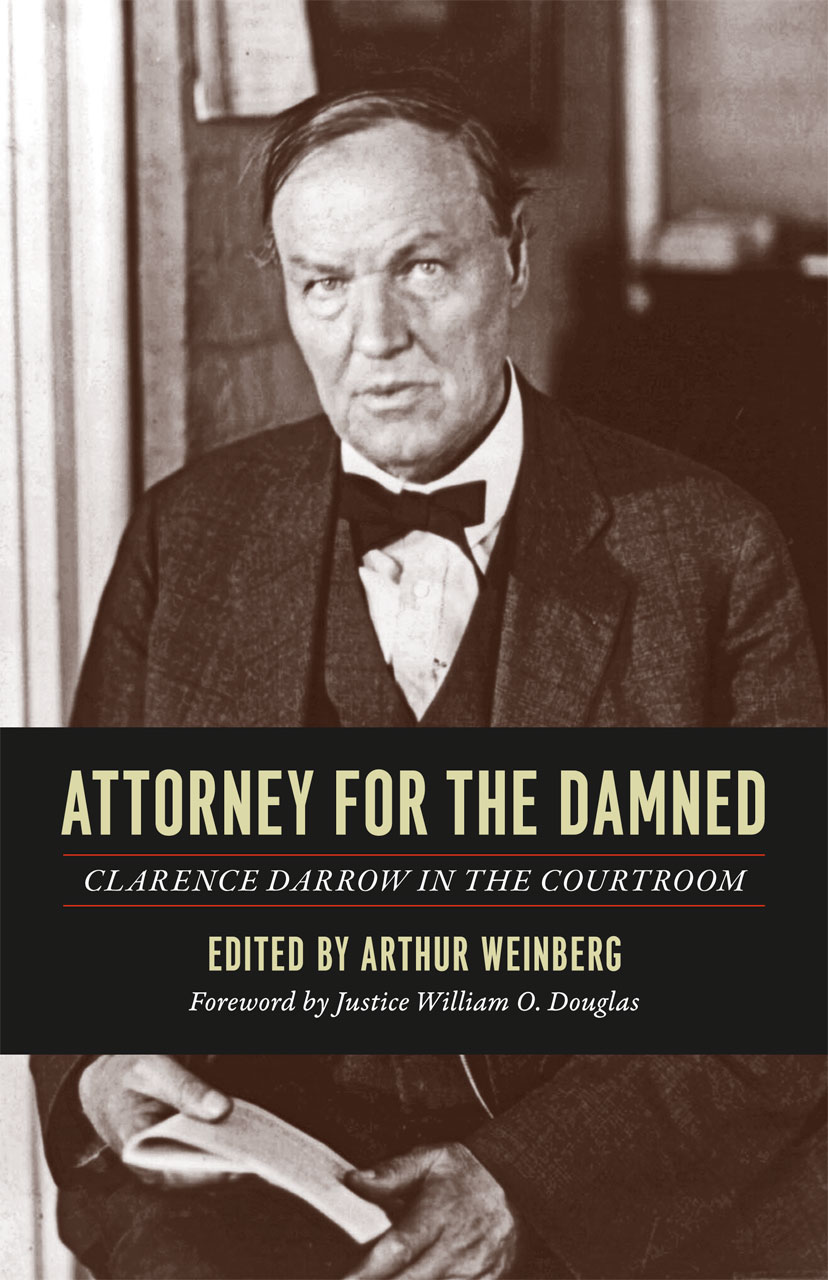
The Foreword is a tipoff regarding Darrow’s politics
I have previously written here about Darrow’s foibles, in particular his serial history of jury tampering—bribing jurors–and his exaggerated role in the so-called “Scopes Monkey Trial,” which he lost. The jury took only nine minutes to reach a guilty verdict! I am chagrined that I overlooked the most egregious case in Darrow’s storied career, in which the 74-year-old lawyer defended a group of vigilante killers following a racially-charged—but unproven–rape allegation in Hawaii in the 1930s.
The final major case in his career, which concluded with his clients being found guilty of manslaughter, is a tawdry finale for a criminal defense lawyer hailed as a progressive-thinking champion of the underdog. One historian notes that “Darrow never stepped into a criminal court again.”
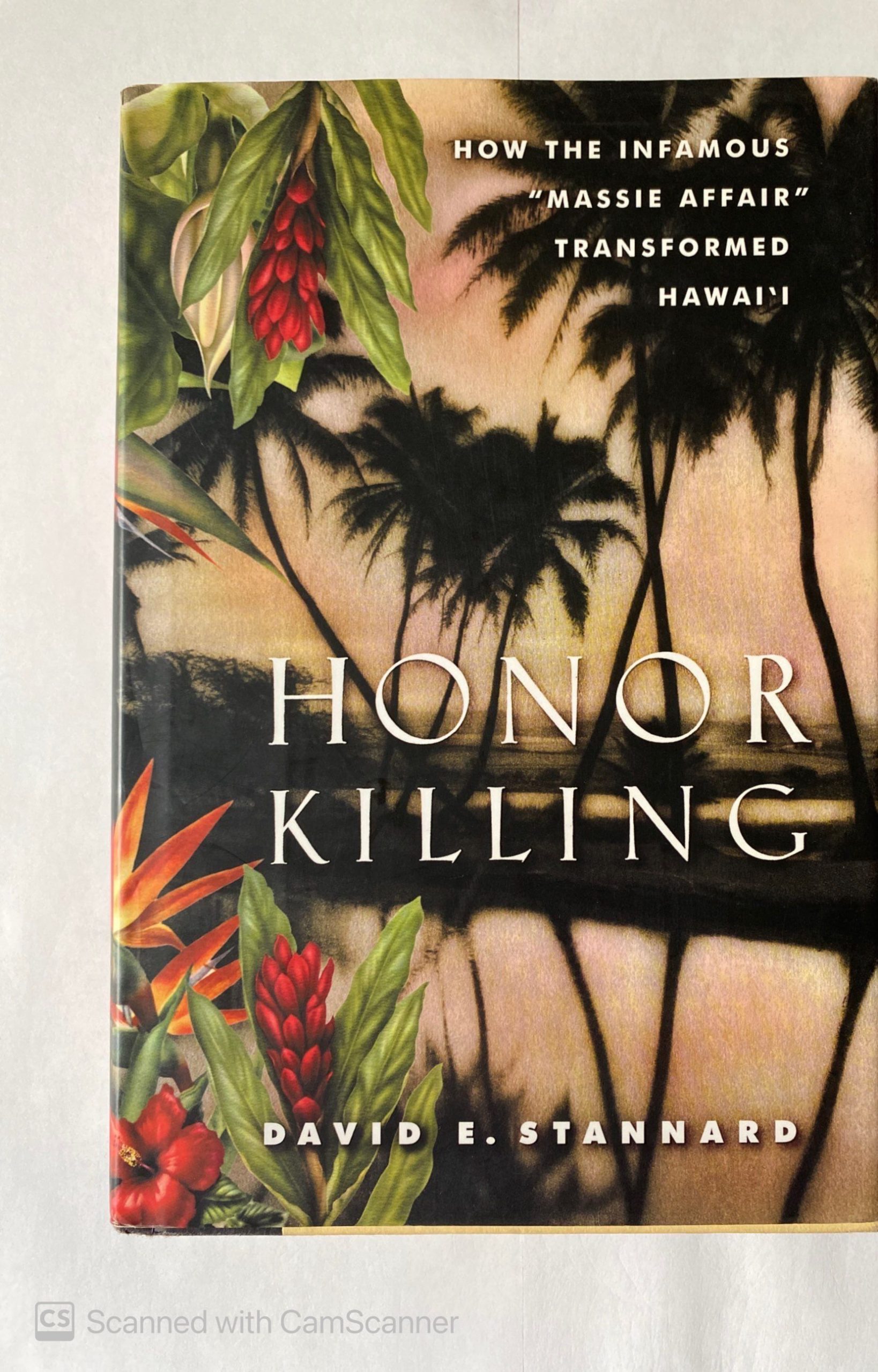
The Massie case, as it is generally known, received sensational publicity worldwide and should have had a devastating effect on Darrow’s reputation. David Stannard’s carefully-researched book, Honor Killing: Race, Rape, and Clarence Darrow’s Spectacular Last Case, published in 2006, tells the tale and explains that upon Darrow’s death in 1938, his friends and eulogists gathered to honor the man:
His major trials were discussed and celebrated—except one. No mention at all was made of the world-renowned case he had tried in Honolulu only six years earlier. And since then, unlike Darrow’s many great contributions to American legal lore, it has faded into obscurity. Because in this one…he was on the wrong side. (Emphasis added.)
Not just “on the wrong side”; in a notorious case that was crowded off the world’s headlines only by the kidnapping of Charles Lindbergh’s infant son, Darrow defended the equivalent of the lynch mob that abducted and murdered Emmett Till in Mississippi in 1955, and in the process likely suborned perjury and presented a frivolous insanity defense in an unsuccessful attempt to get four admitted killers off the hook. What was the Massie case, what was Darrow’s role, and why has it been overlooked by Darrow’s admirers? The events leading up to the Massie case began to unfold late in the evening of September 12, 1931 in Honolulu, during the Depression and when Hawaii was still a territory (it was not admitted as a state until 1959).
At the time, the Hawaiian economy was dominated by sugar cane and pineapple plantations, which were controlled by a close-knit oligarchy of powerful white businessmen. Politics in Hawaii were conservative; the state’s governor was appointed by the President, not elected. The island of Oahu hosted a large complement of (mainly white) military personnel; Pearl Harbor housed the Navy’s Pacific Fleet and Schofield Barracks in Honolulu was a large Army post. An estimated 15-20,000 military personnel were stationed in Hawaii after World War I. Relations between the impoverished locals and “haole” (white) military personnel were strained. This was during the Jim Crow era in America, and the same racist attitudes exhibited toward blacks on the mainland extended to whites’ attitudes about dark-complected Hawaiians, which included native Hawaiians, Japanese, Filipinos, Chinese, and other ethnicities brought in to work on the plantations. The 1930s were also the age of “yellow journalism”; nationwide, newspapers were dominated by the Hearst chain and its sensational rivals, which wielded enormous influence over public opinion. The local papers in Oahu, especially the Honolulu Advertiser and the Honolulu Star-Bulletin, catered to the haole establishment.
With this tableau, a 20-year-old white woman named Thalia Massie, the wife of a Navy officer, alleged that on September 12, 1931 she had been abducted, beaten, and raped by a carload of dark-skinned Hawaiian men as she was walking home by herself from a nightclub in Waikiki. Given the circumstances, it is not surprising that Massie’s allegation provoked a storm of outrage, akin to the Scottsboro rape claim in Alabama earlier that same year. In all the resulting media frenzy it was overlooked that Massie was a troubled woman whose marriage was on the rocks; her uncorroborated story shifted; doctors were unable to confirm her rape claim (although her jaw was broken, under circumstances that remain a mystery); her unblemished shoes and clothing showed no sign of the brutal attack she claimed she experienced; and her eyewitness identification of the suspects and the car they were driving was questionable given her poor eyesight. (Years later, Massie would attempt suicide, be committed to a mental hospital, battle a drinking problem, and die of a drug overdose at age 52.)
Nonetheless, because she was a white military wife from a socially-prominent mainland family, five local youths were arrested, indicted, and prosecuted–despite consistently protesting their innocence and having an airtight alibi. Five local youths, including 20-year-old Joseph Kahahawai, were quickly brought to trial for rape, which began on November 16, barely two months later. The trial was the biggest news story in Honolulu. The jury consisted of one Caucasian, one Portuguese, two Japanese, two Chinese, and six mixed Caucasian-Hawaiians. Following a spirited three-week trial and four days of deliberations, the jury was unable to reach a verdict. A mistrial was declared. According to one account, “The mistrial outraged Navy personnel and white citizens in Hawaii and government officials throughout the United States.”
On the mainland, the reaction bordered on hysterical. The news media, both national and local, had decreed the defendants guilty of rape, despite the mistrial. Time magazine fanned the flames of racial tension with a story titled “Lust in Paradise,” suggesting that Hawaii was brimming with sex-crazed beasts (“young native bucks,” in Time’s words) eager to rape white women. The Hearst papers called for martial law to be declared in Hawaii. In this climate, the defendants were released on bail pending retrial because rape was not a capital crime. Twelve days later, on December 12, one of the defendants, Horace Ida, was kidnapped at gunpoint by a group of white men and beaten badly in an unsuccessful attempt to extract a confession. Ida survived but was unable to identify his attackers.

Joseph Kahahawai is the forgotten victim
Next, on January 8, 1932, Thalia Massie’s mother, socialite Grace Fortescue, conspired with Thalia’s husband, Lt. Thomas Massie, and two Navy enlisted men, Albert “Deacon” Jones and Edward Lord, to kidnap another of the defendants, Joseph Kahahawai, to extract a confession by force. (Kahahawai, a native Hawaiian, was the darkest-skinned of the accused rapists.) The plan went awry when Kahahawai was shot and killed during questioning—without having confessed. Fortescue, Lt. Massie, and Lord were arrested when they were caught red-handed trying to dispose of the body. Jones was arrested separately. Police found overwhelming evidence of their guilt at Fortescue’s rented cottage, which was the bloody crime scene. In a post-arrest interview by the New York Times, Fortescue frankly admitted the crime, stating that she had slept better after the murder than she had in a long time, and expressed regret only that she had “bungled” the disposal of Kahahawai’s body. Hawaiians were shocked by the brazen murder of Kahahawai at the hands of haole vigilantes. His funeral, held on January 10, was attended by thousands of people.
The “honor killing,” as it was being called, galvanized all the rivaling ethnic groups on the island into solidarity. Some said it was the largest funeral in Hawaii for someone of non-royal blood. All four conspirators in the murder plot were indicted for second-degree murder. (The lopsidedly-white and sharply-divided grand jury was reluctant to indict the defendants at all.)
This is where Clarence Darrow enters the story. Fortescue’s wealthy mainland friends raised $40,000 (the equivalent of over $800,000 in today’s dollars) to hire a defense lawyer from the mainland to represent the conspirators, including Fortescue, in a case that had dominated the nation’s headlines for nearly a month. It would be a rich payday for two months’ work—the biggest fee in Darrow’s career. Darrow, destitute from failed investments and helping his son repay debts, agreed to come out of retirement. He took the case and boarded a ship to Hawaii. Darrow’s strategy for the murder trial set to start on April 4 was to assert the insanity defense, while ultimately hoping for the jury to ignore the law and vote their consciences—a legal technique known as jury nullification.
Darrow intended to inflame the jury with the facts of the rape case—even though it had resulted in a hung jury—and rely on jurors to follow the “unwritten law” that a white man could exact revenge for the defiling of a white woman by a dark-skinned Hawaiian. All it would take is one pro-defense juror to produce a mistrial. Darrow’s complications began with jury selection; the unfamiliar names and inscrutable faces of the men in the Asian-dominant jury pool made it difficult for Darrow to identify jurors whom he believed would be sympathetic to the defense. Darrow’s legal career on the mainland—mostly in the Midwest—left him adrift with the polyglot demographics of Hawaii. He was out of his element. The 12-man jury ended up with three Chinese, two Hawaiians, and seven whites, including one Portuguese. John Kelley, the rookie prosecutor, put on a devastating case-in-chief against the four conspirators, led by Fortescue.
The evidence included matching the steel-jacketed .32 caliber bullet removed from Kahahawai’s body to the magazine and empty shell casing found hidden in Jones’ clothing at the time of his arrest. (The .32 semi-automatic pistol sold to Jones prior to the murder was missing—presumably discarded prior to his arrest.) The only thing Kelley had not proven was which defendant actually pulled the trigger, which is irrelevant in a conspiracy case. In Darrow’s defense case, he called Thomas Massie—the husband of the putative rape victim– as his first witness. Thomas Massie testified about the events that occurred on September 12, 1931, seven months earlier, except that in his telling Kahahawai was the ringleader in the rape, not just one of the five youths allegedly responsible.
Darrow conceded that Thomas Massie fired the fatal shot, but argued that he was insane with grief and rage—over the alleged rape and the subsequent mistrial—at the time. (Darrow understood that in an “honor killing” case, the husband is the most sympathetic triggerman.) Thomas Massie’s “well-coached” account of the abduction and shooting of Kahahawai largely tracked the prosecution’s case, including the use of Jones’ .32 gun, except that he claimed Kahahawai confessed to the rape, at which point Massie had no memory of what transpired until he, Fortescue, and Lord were arrested an hour later. The prosecutor believed that the actual killer was Jones, since his gun was the murder weapon, but Massie’s self-serving confession could not be shaken. Darrow called two psychiatric witnesses—called “alienists” back in the day—to testify that “a man’s violated sexual honor could cause a bout of temporary insanity, or mania transitoria.” Darrow also called Thalia Massie,who tearfully reprised her testimony from the rape trial, adding that she and her husband were tormented by the mistrial.
Thalia dramatically recounted that on the morning of Kahahawai’s murder, Jones showed up at Thalia’s home, handed her a gun, and told her, “Here, take this, Kahahawai has been killed.” Darrow rested his case without calling Fortescue, Lord, or Jones. Their fate would depend on the jury’s reaction to the Massies’ testimony. Prosecutor Kelley’s rebuttal expert witnesses effectively debunked—even mocked–the defendants’ flimsy insanity defense. This theme continued during closing arguments. The prosecution stressed that the methodical planning and execution of Kahahawai’s abduction and interrogation, by four conspirators, and the lengthy delay between the alleged rape and the murder, belied the notion of a momentary bout of mania. The theme of the defense’s closing argument was that “honor killings” deserved the jury’s mercy. Darrow did not even mention his alienists’ testimony in his appeal to the jury. He made a naked appeal for jury nullification. Privately believing that “the brown men [in Hawaii] were prejudiced against the white,” Darrow exhorted the jury to “forget race and look upon this as a human case.” In light of the overtly-racist nature of the national (and local) news coverage of the alleged rape, and calls for martial law in Hawaii, this must have struck the jury as incongruous.
After two days of deliberations, the sequestered jury reached a compromise verdict of manslaughter against all four defendants, punishable by ten years at hard labor. Darrow was stunned. The jury rejected the insanity defense and Darrow’s appeals to the “unwritten law” justifying an “honor killing.” Few jurors believed that Thomas Massie pulled the trigger or that Kahahawai had confessed. The jurors felt the defense case was based on lies and appeals to emotion. One juror dismissed Darrow’s theatrical closing argument with this: “He talked to us like a bunch of farmers. That stuff may go over big in the Middle West, but not here.” The haole business establishment and Navy brass in Washington, D.C. were apoplectic at the guilty verdict.
Hawaii’s governor was pressured to grant a pardon, but refused. Following a visit to the governor’s home by Darrow (and a rumored call from the White House), the governor granted Darrow’s petition for commutation of the defendants’ sentences from ten years in prison to one hour in the custody of the sheriff. With that, Kahahawai’s murderers were set free. The locals were furious at the miscarriage of justice. The remaining rape defendants were never retried, primarily because–at Darrow’s urging—Thalia and Thomas Massie left the island forthwith, absconding to the mainland. While most locals were outraged at the leniency shown to the convicted killers, the business community and mainland politicians clamored for a pardon.
To put an end to the grossly-inaccurate reporting that had long characterized the Massie case, and to clear the air for a potential re-trial of the rape case (or to explain the failure to retry the case), local officials agreed to fund a comprehensive investigation into the facts by the renowned Pinkerton Detective Agency, which over the course of three months interviewed hundreds of witnesses and prepared a 300-page report. The Pinkerton Agency’s conclusion: The five youths accused of rape could not have committed the crime due to an airtight alibi, and, further, there was no evidence to establish the occurrence of a rape at all.
In Honor Killing, Stannard postulates that Darrow urged Thalia “to pack her bags and get out of town immediately” to thwart a retrial because he knew, based on a friendship he had developed with her personal physician, that she had never been raped. The rape allegation, in other words, was a hoax. The trial of the five local youths was a farce, and the “honor killing” of Joseph Kahahawai was a racist act of retribution for a crime he didn’t commit. Charges were eventually dropped against the remaining four rape defendants.
Thomas and Thalia Massie got divorced. Thomas Massie, despite a manslaughter conviction, continued to serve in the Navy until he was discharged in 1940 for psychiatric reasons after spending two months in St. Elizabeth’s Hospital (where John Hinckley was later confined after attempting to assassinate President Reagan). Darrow died in 1938 at age 80. In a Life interview in the early 1960s, Albert Jones admitted that he fired the fatal shot, using his own gun, and that Kahahawai never confessed. Jones said that he had told this to Darrow during the trial. Asked about who came up with the version of facts presented in court in the murder trial, Jones responded that “It was Mr. Darrow’s idea to let Tommie take the wrap. Tommie had a motive and the reason.
After all, it was his wife.” (Emphasis added.) The Massie case is an indelible stain on Darrow’s career: a tropical precursor to Emmett Till, with Darrow defending the lynch mob. Greatness is not a title to be conferred, but a measure of one’s actions and decisions. Darrow’s final case should have defined his legacy, but—sadly– hagiographers have air-brushed the travesty out of his career.