John Eastman’s Disbarment in California Is an Outrageous Violation of the First Amendment Warranting Supreme Court Review
Attorneys have First Amendment rights, just like everyone else.
Thanks to Power Line, Real Clear Policy (here), the Tennessee Star (here), Instapundit (here), Ace of Spades HQ (here and here), and The Tom Woods Show (here)!
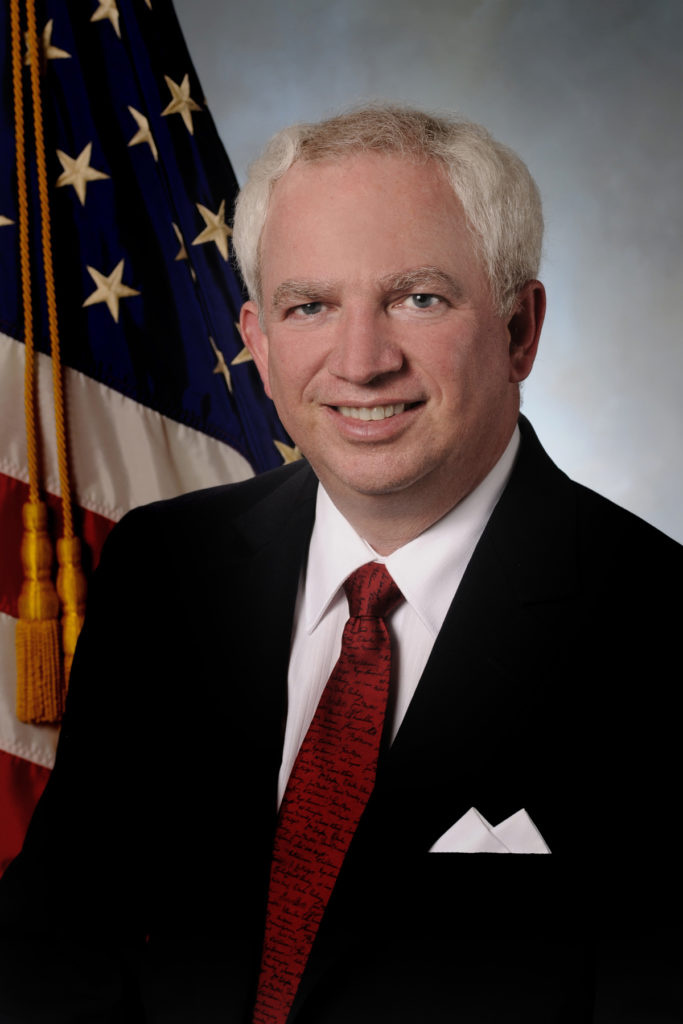
John Eastman’s only hope for keeping his law license in California is a “Hail Mary” pass to the U.S. Supreme Court. We should all hope that SCOTUS catches it.
The essence of California’s case against John Eastman is that the bar authorities didn’t like the advice he gave to his client, President Trump, regarding the available mechanisms for challenging irregularities in the 2020 election. Eastman did not steal from a client, fail to communicate, miss a filing deadline, engage in a conflict of interest, or practice under the influence of drugs or alcohol. He simply gave legal advice that the bar authorities deemed to be “off limits,” even if supported by scholarly research and historical precedents. For simply doing what his client asked, he was disbarred. In short, Eastman is a victim of government censorship, in violation of the First Amendment.

Lawyers have First Amendment rights, just like everyone else. That’s why attorneys can advertise, despite previous ethical rules prohibiting the solicitation of clients. [Bates v. State Bar of Arizona (1977)] Free speech protects many forms of expression, including topless dancing, pornography, violent video games, “crush videos,” publishing classified government documents, even telling lies and spreading hate [Matal v. Tam (2017) (per Alito, J.)]. How can providing legal advice to a non-objecting client be punished? The subject of Eastman’s legal advice was “core political speech,” which lies at the heart of the First Amendment.
State bars cannot censor such speech any more than state actors could punish people for writing letters to the editor or making speeches to a community group. Even in the law of libel and defamation, opinions are protected; only false factual statements are actionable, and even then “malice” is required if the defamed victim is a “public figure.”
Law professor Jonathan Turley warns that “Eastman’s disbarment should be a concern for everyone who values the rule of law and free speech.” Why? Because, in Turley’s words,
Eastman is being punished for [helping] to develop Trump’s legal argument for blocking the election certification. [Eastman] admitted that there were few cases to cite as precedent, and acknowledged that he and the Trump legal team were advancing novel theories. But that is not unusual in controversial cases. Public interest attorneys often advance novel legal arguments, challenging existing precedent and the status quo. Even longstanding precedents, like Roe v. Wade, have been overturned after years of litigation. California State Bar officials failed to address the implications that disbarring Eastman would have on other cases in which new legal theories are tested.
Despite decades of legal activism since the advent of the civil right movement in the 1960s, none of the left-leaning advocates for reform were ever disciplined by bar authorities on the grounds that the legal arguments were “off limits.” Under prevailing standards, John Adams could have faced disbarment due to his representation of British soldiers charged in the Boston Massacre, instead of becoming our second President. Thurgood Marshall could have been disbarred for arguing Brown v. Board of Education, instead of becoming the first African-American to serve on the Supreme Court. O.J. Simpson’s legal team would have been disbarred instead of being treated as heroes. And so on. As Turley concludes, “There cannot be a different standard for different candidates, or different clients.”
Just this term, the Supreme Court recognized, in Chiles v. Salazar, that licensed therapists have the First Amendment right to speak to their patients without government interference. Why should lawyers have second class status?
In less politically-charged times, noted leftist legal scholar Erwin Chemerinsky argued in favor of greater First Amendment protection for lawyers. While Chemerinsky was concerned about lawyers’ ability to speak to the press about pending cases, another legal scholar addressed the issue facing John Eastman—legal advice to a client—arguing that “An attorney’s advice for navigating and, when necessary, challenging the law is essential to American democracy.” Writing in 2011, this scholar argued that “the First Amendment protects advice rendered by attorneys to their clients, and that legal advice may be constitutionally restricted in only very limited circumstances.” The 77-page-long article is entitled “Attorney Advice and the First Amendment.”

My goal here is not to reprise the case for First Amendment protection for attorney advice, or for John Eastman in particular, but only to point out that the Supreme Court must not overlook this issue, which is squarely presented by Eastman’s disbarment in California. TDS (Trump Derangement Syndrome) has caused many on the Left to lose their minds, making it difficult for left-of-center legal scholars to objectively analyze the merits of Eastman’s case. One clear-thinking law professor, Rebecca Roiphe, has written a law review article entitled “Why Courts Should Not Discipline Trump’s Lawyers.”
Roiphe argues that “disciplinary charges in politically charged cases are often unconstitutional and even when they are not, they are unwise and counter-productive because they chill useful advocacy and threaten democratic values.” Regarding John Eastman, Roiphe states that
The California bar court’s First Amendment analysis is superficial. It concludes that lawyers have no right to make knowingly false statements of fact or law in public. This conclusion is inconsistent with case law and would restrict lawyers from doing what all other individuals are entitled to do even if the administration of justice is not at issue….[A] lawyer’s obligation is not to the Constitution or democracy, but rather to the courts…. Lawyers should be allowed to advance poor, and even laughable, positions on behalf of their clients when no court proceeding is involved. They should be given even more leeway when clients may be advancing a controversial political position or interpretation of the Constitution. And of course, any challenges in the context of presidential elections will inevitably involve these sorts of charged issues. [D]isciplining lawyers in this context is dangerous. In short, democracy depends not only on the coexistence of diverse views but also an ongoing contest over the meaning of the Constitution. By putting the thumb on the scale, even when the viewpoint at issue seems obviously mistaken, state bar regulators usurp too much power over this process. There may come a time when the dominant view, held by state regulators, is destructive, wrong, or dangerous and the discipline of Eastman and lawyers like him offers precedent for those regulators to control the range of acceptable political views.
Again, I do not intend to reprise 39 pages of a heavily-footnoted law review article. My point is that the First Amendment protection of lawyers giving legal advice to their clients is an important issue. It would be a travesty of justice for the Supreme Court to fail to hear Eastman’s appeal.
Vital constitutional issues are at stake. The weaponization of the bar disciplinary process affects the entire legal profession, not just John Eastman. Already the bar disciplinary process has been turned against Department of Justice lawyers, including former Assistant Attorney General Jeffrey Clark from the first Trump administration and Ed Martin from the current administration.