The Fight Over Birthright Citizenship Has Just Begun
“Right of the soil” or illegal alien invasion? Two MAGA legislators have introduced a solution to “jus soli” called the Citizenship Act
Thanks to the Tennessee Star (here)!

One prescient commentator (Professor Jonathan Adler, now at William & Mary Law School) predicted that the Supreme Court’s controversial decision in Trump v. Barbara would not end the debate over birthright citizenship, and he was right: “In the end, an opinion meant to settle the debate over birthright citizenship may have instead kindled a new one.” Already, the MAGA voices in Congress are introducing legislation to circumvent Chief Justice John Roberts’ erroneous embrace of the English common law doctrine of jus soli, as articulated in the ancient decision in United States v. Wong Kim Ark, 169 U. S. 649 (1898). Roberts opined that the doctrine of jus soli is embedded in the Fourteenth Amendment via the Citizenship Clause, and therefore cannot be modified by statute or executive order.

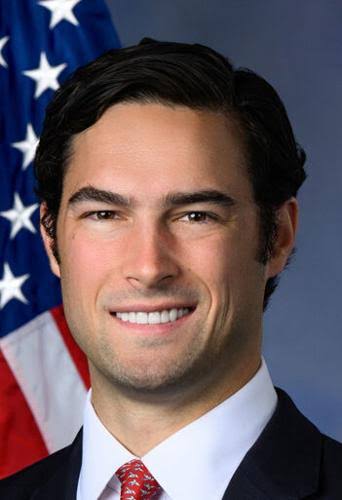
Not so fast, said Sen. Jim Banks of Indiana and Rep. Brandon Gill of Texas. They focused on one of the few exceptions to jus soli recognized in Wong Kim Ark—children born in the U.S. “of enemies within and during a hostile occupation of part of our territory” are not entitled to birthright citizenship. Banks’ and Gill’s solution to Trump v. Barbara is to pass a statute (called the Citizenship Act) declaring that the mass illegal immigration into the U.S. is an “invasion” or “hostile occupation.” Birthright citizenship (or jus soli) is not absolute; it has several exceptions.
Wong Kim Ark held that:
The real object of the Fourteenth Amendment of the Constitution, in qualifying the words, “All persons born in the United States” by the addition “and subject to the jurisdiction thereof,” would appear to have been to exclude, by the fewest and fittest words (besides children of members of the Indian tribes, standing in a peculiar relation to the National Government, unknown to the common law), the two classes of cases — children born of alien enemies in hostile occupation and children of diplomatic representatives of a foreign State — both of which, as has already been shown, by the law of England and by our own law from the time of the first settlement of the English colonies in America, had been recognized exceptions to the fundamental rule of citizenship by birth within the country.
(Justice Kavanaugh’s concurring opinion (really a dissent) in Trump v. Barbara observed that Wong Kim Ark “adopted a general rule of birthright citizenship for those born in the United States—with four disparate exceptions for ‘children of foreign sovereigns or their ministers, or born on foreign public ships, or of enemies within and during a hostile occupation of part of our territory’ and ‘children of members of the Indian tribes.’ Id., at 693.” (Emphasis added.))
The proposed legislation would declare that an invading army of illegal immigrants, swarming over our borders in violation of federal law, is not different than a hostile foreign military force. Ergo, the children of illegal aliens are not citizens any more than the offspring of invading soldiers would be. Fox News reports that
The Citizenship Act would declare that children of statutory “invaders” are not entitled to birthright citizenship under the law and codify a 2025 executive order that cites the term.
In its summary, Banks’ bill declares “any person who enters the United States without authorization or for the purpose of engaging in birth tourism is considered an invader...” and amends the Immigration and Nationality Act to exclude children of such “invaders.”
Banks’ key use of “invaders” cites Trump’s executive order declaring illegal immigration across the southern border an “invasion,” while the bill notes the Barbara decision leaves that avenue open for Congress to crack down on.
Without touching the constitutional amendment process or attempting to overturn any court ruling, the Citizenship Act will codify Trump’s declaration of “invasion” and amend federal law to revoke birthright citizenship from children of illegal immigrants under exceptions listed in the same case the Barbara ruling’s majority used as its precedent.
In The Federalist, Iowa Solicitor General Eric Wessan points out that “invaders” do not have to be a uniformed force bent on armed conquest; a handful of foreigners dressed in civilian clothes will suffice:
Consider Ex parte Quirin, the 1942 case of eight Nazi saboteurs who came ashore from U-boats in Long Island and Florida carrying explosives to attack American infrastructure. They were not an army, abandoned any uniform, and occupied no territory. They arrived as individuals, in secret, disguised as civilians — precisely the profile the skeptics say the invasion exception cannot reach. Yet a unanimous Supreme Court had no difficulty classifying them as enemy belligerents subject to the law of war, and it upheld their trial by military commission. One of them even claimed American citizenship. The court held it made no difference: A citizen who joined the enemy’s hostile incursion was an enemy belligerent soldier.
Wessan emphasizes an additional benefit of the Citizenship Act: “Another benefit of the Citizenship Act is that judicial review is constrained in the context of what the Supreme Court has called political questions. And designating an invasion — especially when that designation is made by the political branches in concert, is an apex political question and thus should be unreviewable.” Even one of the leading defenders of birthright citizenship (prior to his appointment to the Fifth Circuit), James Ho, agrees that “whether a surge of illegal entry amounts to an ‘invasion’ is a political question, not a legal one. There are no judicially manageable standards for deciding when an influx of unlawful migrants becomes an invasion; that determination belongs to the political branches, not to judges.” Ho so opined in U.S. v. Abbott, which concerned the federal government’s obligation to protect states from invasions, in Article IV, section 4.
The Citizenship Act is a brilliant maneuver. Rep. Brandon Gill sponsored the House counterpart to Banks’ bill. Bravo!